
I am taking megadoses of ritalin to try to find some energy.
Back on steroids to stabilize the brain.
Only two more scheduled treatments of Avastin, which is causing me great fatigue. Then an MRI and maybe I can get off Avastin.
Still stuck at home, although working through e-mail and the phone.
Today I was looking for the best under counter wine fridge and I found this.
Walked my dog Zaggy today. Fell on a curb on 56th Street, went sprawling and badly hurt myself. Four guys on the street helped me recover and get up. I then fell in my apartment. Zaggy came up to me on the floor and started licking me.
Changed my distributor in Washington State today. Very hard to do.
All this leads me to the obvious question: who appointed Alice Feiring to be the spokesperson for natural wine? She is being very hostile.
Which leads me to the next obvious question: why do Jenny & Francois make believe they own the idea of natural wine? I respect them as honest competitors when they act honestly. I do not respect them when they pretend they own natural wine as a category. If they want to have a Jenny & Francois Natural Wine Tasting Week, I'm all for it. If they want to have seven years of The Natural Wine Week as if it is something they own and exclusively represent than they are being disrespectful of their colleagues and the scores of natural winemakers they do not represent.
We just had 38 vignerons in America with us. In the past we called this annual tour something like The Louis/Dressner Real Wine Assault. This year we called it:
From Cairo thru the Middle East thru LA to San Francisco Thru North Carolina Thru New York and then Chicago!
Freedom Wines and Freedom Vignerons Advancing Against Industrial Tyrants
Zaggy agrees with me about this even if Alice Feiring does not.
The wines and winemakers speak for themselves. They don't need fake posturing.
Freedom Wines and Freedom Vignerons are Advancing Against Industrial Tyrants!
This is your chance to show your support. An unprecedented tour of America by freedom loving vignerons will start in Los Angeles on March 15th after an alleged ground-breaking tour of the Middle East.
Victory to Wild Yeast Fermentations, Natural Wine, Low Sulfur, Hand Harvesting and Delicious Wines!
The various tastings will include highly secretive trade tastings in each city. These tastings are only open to certified members of the wine trade. The public tastings will be open to most everyone, except professional provocateurs and apologists for too much sulfur. Firearms, either hidden or displayed, are banned at both public and non-public events. Hats are optional on both men and women.

Went to the office this week for one day, first day I was there since early November.
Continuing my Avastin Cancer treatment and I seem to be making progress. Still tired and achy, but I seem to be making advances. At least the gamma knife surgery of November and the Avastin seem to be in spirited battle against my tumors.
Was able to survive 2 1/2 weeks with Denyse in Europe thanks to Sheila, Vicki, Alyce and all the people who came over and helped me out.
Alyce is coming down to New York for 10 days soon to celebrate Montreal's reading week. Jules has started working for Louis/Dressner in California and is going to bring us into the 21st century.
Big tour of France is over and now something like 30 vignerons are coming to LA, San Francisco, New York, Chicago and North Carolina in Mid-March. The bastards!
Big tasting on March 1st in Boston for the trade. Meet the famous Josefa Concannon, the newest member of the Louis/Dressner team! She will be signing copies of her new autobiography -- I Successfully Sold American Wines for Six Years All Over the Midwest!.
Have questions about whether you should use an Iphone or Android phone? Feel free to contact me!
And what a two weeks in Egypt! We are lucky to be living in a time where a popular explosion of pure revolutionary fever can take place peacefully and successfully. I truly regret that my physical condition prevented me from hopping on a plane and flying to Cairo.
I now have an eat-in kitchen with a window!
This is the dream of every New York Manhattan apartment dweller.
I discovered today that I could fit my wheeling office chair into my tiny kitchen and successfully swivel and maneuver it all about. I can cook, make tea, eat, clean, read my kindle, make phone calls and have a fabulous time. Food still tastes badly, but there is some improvement.
Denyse is in France for two weeks and I have been worried how I would manage. This is going to work!
It might be a nightmarish scenario for an Occupational Therapist but who cares?
I had an MRI (or what the French call an IRM) yesterday. I recently developed two new tumors, which popped out during an MRI in early November. I then had brain surgery on November 11th, and I have been on a mix of steroids, anti-convulsion medications, and a whole cocktail of drugs to combat the drugs that I need to take to reinforce the drugs I currently take and used to take and might take in the future, that is if I have a future with all these drugs and my cancer.
Basically, I have sat at home for the past two months and will be missing my winter trip to France for the first time in twenty years. I have lost a great deal of mobility and can't get around. I have been waiting to see if the surgery worked and where my cancer is taking me.
Over the past six weeks I have started a treatment called Avastin. I am intravenously fed Avastim every two weeks in the hopes this will be a miracle anti-cancer drug. Of course, I have not been optimistic because my body ain't up to snuff. Food tastes bad, wine is difficult and I'm an unhappy guy.
I have been waiting for a new MRI to see if the surgery and the Avastin are anything more than a waste of time and the nation's health budget. Perhaps I am best suited for one the Sarah Palin legendary death squads?
I had the MRI yesterday. I see two oncologists, one for cancer and one for radiation (although I am never sure who does what but they both seem fabulously competent).
Anyhow, both my oncologists at the NYU Cancer Center were astounded by the MRI. They both said that if they didn't know my history they would have taken the MRI results as totally normal, with no traces of tumors or cancer activity. That the results were remarkable!
Today, I was contacted to see if I might be interested in a reality TV show -- The Real Brain Cancer Victims of Sutton Place!
In other words, some good news! I cannot tell you all how thrilled I am!
Of course it has to stay like this. In the next week, while half of America is in France is at the Dive Bouteille, my doctors will be consulting to change my treatment. They might want to just leave me on Avastin over the next few months and progressively lift all the other treatments. Avastin is a tiring drug, but it might be that I am currently being overtreated and subject to unnecessary exhaustion.
So there you go....
Thanks for all your concern.
And remember not to pray for me or wish me a quick recovery.
Denyse will be away for two weeks and I would appreciate any visits, help and encouragement.
Except from you.
Joe
I had an MRI (or what the French call an IRM) yesterday. I recently developed two new tumors, which popped out during an MRI in early November. I then had brain surgery on November 11th, and I have been on a mix of steroids, anti-convulsion medications, and a whole cocktail of drugs to combat the drugs that I need to take to reinforce the drugs I currently take and used to take and might take in the future, that is if I have a future with all these drugs and my cancer.
Basically, I have sat at home for the past two months and will be missing my winter trip to France for the first time in twenty years. I have lost a great deal of mobility and can't get around. I have been waiting to see if the surgery worked and where my cancer is taking me.
Over the past six weeks I have started a treatment called Avastin. I am intravenously fed Avastim every two weeks in the hopes this will be a miracle anti-cancer drug. Of course, I have not been optimistic because my body ain't up to snuff. Food tastes bad, wine is difficult and I'm an unhappy guy.
I have been waiting for a new MRI to see if the surgery and the Avastin are anything more than a waste of time and the nation's health budget. Perhaps I am best suited for one the Sarah Palin legendary death squads?
I had the MRI yesterday. I see two oncologists, one for cancer and one for radiation (although I am never sure who does what but they both seem fabulously competent).
Anyhow, both Dr. Narayana and Dr. Gruber at the NYU Cancer Center were astounded by the MRI. They both said that if they didn't know my history they would have taken the MRI results as totally normal, with no traces of tumors or cancer activity. That the results were remarkable!
Today, I was contacted to see if I might be interested in a reality TV show -- The Real Brain Cancer Victims of Sutton Place!
In other words, some good news! I cannot tell you all how thrilled I am!
Of course it has to stay like this. In the next week, while half of America is in France is at the Dive Bouteille, my doctors will be consulting to change my treatment. They might want to just leave me on Avastin over the next few months and progressively lift all the other treatments. Avastin is a tiring drug, but it might be that I am currently being overtreated and subject to unnecessary exhaustion.
So there you go....
Thanks for all your concern.
And remember not to pray for me or wish me a quick recovery.
Denyse will be away for two weeks and I would appreciate any visits, help and encouragement.
Except from you.
Joe
I have received numerous inquiries on the State of the Captain, so I decided to finally post something.
The Captain has been in better shape, but all hope is not lost.
I had brain surgery on November 11th after two new brain tumors appeared during an MRI. Prior to that, my brain was clear of tumors since I finished intensive radiation and chemotherapy in June of 2009.
Denyse and I traveled to Montréal in late October and I felt noticeably weaker, returned to New York and contacted my doctors who immediately found the two tumors.
The surgery was done with gamma knife surgery, which is a form of intense radiation which allows the surgeons to operate without opening up an incision. It is all done through radioactive hocus pocus and according to the best case analysis is simply an in-patient surgery with a quick recovery. This is not to say there is a guarantee that it works, but there should not be a lengthy recovery.
This has not been my case. My mobility in my right foot and leg have been significant reduced and I have been isolated at home since the surgery. I have great difficulty walking and getting about. My condition is worse than before the surgery.
I also have no idea if the treatment was effective in pushing back my cancerous growths and where exactly the state of my brain cancer is right now. I am taking Avastin intravenously every two weeks. This is a drug that hopefully starves nutrition to the cancerous growths and reduces them. We will spend several weeks in the hope that this works, it it does not we will have to try something else. And then something else.
So, I'm in a state of suspense, where there is a little I can do but hope I recover and beat back the current fight with cancer. I have had a great 18 months since my first tumor was detected and defeated and I hope to do it yet again.
I have the support of the greatest family, friends and business colleagues in America, France, Italy and Portugal and I am thankful for and proud of all of them.
I have a fierce atheist pride in what we all have done and the lives we have lead that gives me the strength to do more....I have the satisfaction that I have done something to help the world, even if it was just to import a unique bottle of wine that someone would have never discovered on their own. I have had a great live from marching for the victory of Viet Cong, to bringing real, natural wines to America, to working with vignerons who have made a difference, raising money for Partners in Health in Haiti, and to sticking out my middle finger to every pompous, reactionary asshole I came across in and out of the wine world.
Fuck them and celebrate humanity!
I am going to be closing up my blog soon and it will send hits to the Louis/Dressner Website. That site is going to be redone, updated and there will be an integrated blog on the site. We are even going to do social media!
We have taken several steps in the last week to strengthen Louis/Dressner. Josefa Concannon, a long time supporter, will be taking on the position of National Sales Manager. Josefa is based in Chicago and will be working with our distributors around the country. We feel we need to provide more support, logistically and organizationally for our customers and Josefa is the perfect person. Plus she runs the marathon!
Additionally, Jules Dressner, a casual relation of Denyse Louis and I, has joined the company on a full time basis and will be working out of the Bay Area in close collaboration with Farm Wines, our distributorship in California. Jules will also be working on written material and be a go between between the vignerons and our American clients.
We are also in the process or rehauling our distribution in several regions and states and hope to see our wines more available around the country....of course within the limits of quantities we receive from our growers. The addition of David Bowler Wines this year in the New York region has been a fabulous development for us as has the growth and stability of Farm Wines in California. Keven Clancy and Jeff Vierra have done a great job with Farm, a company where Louis/Dressner are slight majority owners.
I have to thank my great friends like Donna Siegel, Jeremy Leeds, Vicki Robinson, Michael Wheeler, Robin Sulkes, and Joe Dougherty. Of course, I don't know where I would be without Kevin McKenna, Sheila Doherty and Lee Campbell.
And I'm still around. E-mail, phones, internet and however I can. For the time being my role will be more limited and I can't travel. I am on a witches cauldron of medications, side effects, steroids, anti-steroids and anti-cancer medicines which makes everything taste absolutely horrible to me. Life without good food and good wine is profoundly depressing, today I cried when I ate breakfast (normally I drink a glass of Frappata), but I am not suffering any pain and have all your support.
Hard to ask for more!
I am entering the Rusk Rehabilitation Institute at New York University Hospital tomorrow for a week and I hope this will help me to regain some strength.
Your friend,
Joe Dressner
My partner and the late Buster's godfather, Kevin McKenna, has spotted a Buster apparition in downtown Manhattan.
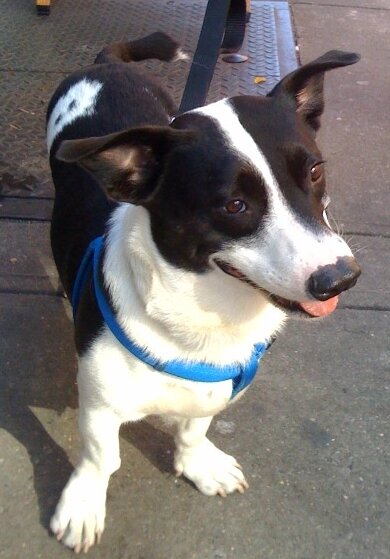
The dog's name is Shorty and Shorty has a twin brother named Patches who lives somewhere in the wilds of Connecticut!

Too early to say if the surgery was a success. Hopefully, the Gamma Knives will have some effect.
Send money to Partner in Health to help this worthy cause.
Every bottle of Louis/Dressner Selections wines bought in the next two weeks will go directly to benefit me in my fight against brain cancer.
We are also considering some special events like:
The Third Annual Walkathon for Joe Dressner's Brain Cancer!. This is a feel good event which allows thousands of walkers to get together to feel good about their solidarity with Joe Dressner's Brain Cancer.
Alternatively, give some money to Partners in Health to help peoole in the Third World who really need the help.
Fuck Dressner and fuck his cancer!
Just a small note to let you all know that I was feeling weak recently and took an MRI and EEG on Friday.
I saw my oncologist yesterday and my original tumor of two years ago remains reduced and dormant.
Unfortunately, I have two spanking new tumors in roughly the same spot.
I feel great, because I have been put on steroids and the energy is surging through me as if I am in a computer animation. Tonight might be the night to finally rent Avatar. I just tasted a bottle of Jean Maupertuis Côte d'Auvergne blind and guessed it was Harlan. That's right, everything around me is buzzing with power.
The steroids make me 28 years younger. I am the young man at NYU's Graduate Journalism School the day I met Denyse Louis, who later became my wife, mother of my children, business partner and dog co-owner. I went today to eat the Muffin Shop on Waverly Street, where we used to hang out with Belgians, Brits and Brazilians. The Muffin shop is now a pizza joint.
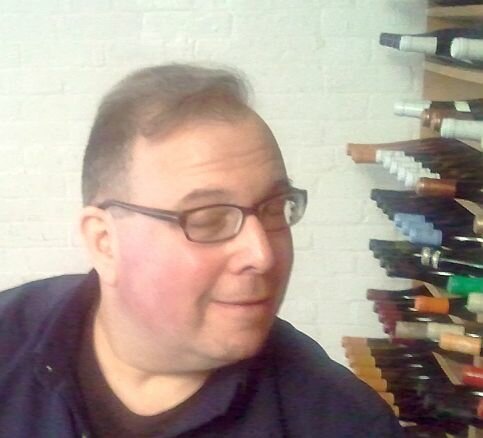
I am meeting with my Neurosurgeon tomorrow to figure out what to do. He is a distinguished physician and loves René Rostaing's Côte Roties from 1995.
Under his guidance, I might enjoy what all the cool kids do and have Gamma Knife Surgery!
After two years, I'm back to being a cancer newbie. I enjoyed it so much the first time and am looking forward to once again sampling the free coffee and graham crackers at the NYU Cancer Care Center. I can't say enough great things about my doctors and am purposely sparing them the humiliation of being outed in public on this blog.
The steroids are great.
I'm stoked!
Getting rid of the new tumors would also be nice. .
Include me in your prayers and wish me a speedy recovery and tell me how your thoughts (and prayers) are with me and all my loved ones.
Send contributions to Partners in Health to people who really need help. I'm a wealthy wine importer with good doctors and a good health insurance plan. I'll get the best care possible, unlike people suffering with horrible medical care all over the world when we have the capacity to do better.
Stay tuned here for hourly reports. Cancer puts me in a foul mood and maybe I'll even feel compelled to revive Dr. Barbara Hirsch, the famous Great Neck Endocrinologist. Many of my readers have been asking me to bring her back.
I had trouble getting to the fundraising event we had today in Tribeca. Chambers Street Wines, David Bowler Wine and Louis/Dressner jointly sponsored a wine tasting to benefit Partners in Health. PIH has been doing amazing work in Haiti since 1987 and has transcended charity to create an entirely new model of self-help and reliance.
Anyhow, I was stuck in a cab in downtown Manhattan trying to get to our event. The problem is that I have trouble taking the subway, because I have limited mobility in my right leg. Unfortunately, I have a brain tumor, which seemingly has been successfully treated, but which did permanent damage to my left leg. Walking up and down subway stairs is very difficult for me and happily, as a wealthy wine importer, I can afford to scoot around town with yellow cabs.
But today, downtown Manhattan was jammed by thousands of people walking in the Eighth Annual Avon Walk for Breast Cancer. My taxi, commandeered by an excellent and seasoned driver, couldn't get anywhere.
I gave thought to participating in an organization fighting Cancer after I found out I had brain cancer. These organizations really do raise money and really help people. Although, I think it is unfortunate that Avon calls their event the "Walk for Breast Cancer." I know this will seem like nitpicking but this gives the horrible impression that Avon and those thousands of walkers are advocating Breast Cancer. Shouldn't they call it the "Walk Against Breast Cancer?"
When I was a kid my parents used to go to Leukemia charity events. They would tell me they were going to a dance for Leukemia or a Dinner for Leukemia. Finally, when I was a young teen, I asked that what sort of sadistic people go to events for Leukemia! I was relieved to learn that these were actually events against Leukemia.
Which brings me back to my Brain Cancer. The wonderful think about Brain Cancer is that it strikes even wealthy Republicans, eccentric rich Tea Party members and everyone across the economic and political spectrum. As does Breast Cancer. It is great to walk or bike or paddle or whatever people feel they need to do to raise money. Because just sending a check is too simple and doesn't make you feel good in a public way and promotional activity develops momentum and brings in bucks.
My point is, that enormous sums of money are being thrown at the diseases that touch the wealthy and the advanced industrial world. Science has not come up with a cure for cancer or a cure for the common cold. But the resources are there and will be used because everyone is motivated to eradicate sniffles, brain cancer and breast cancer.
I for one have benefited from these resources. Roughly two years ago, I was told I had no chance of living to celebrate the birthday I celebrated three weeks ago. My number was up.
It turned out differently. I'm still around and have the doctors and staff of NYU Cancer Institute to thank for my treatment, longevity and hopeful recovery. I limp about and have to take taxis and can't ride my bike, but it could be worse. As a wealthy wine importer I am blessed with a good medical insurance and know enough good doctors to make sure I received great care.
I was initially hospitalized after having a convulsion at a fancy wine dinner, which quickly lead to scans and MRIs displaying my tumor in its full glory. A social worker at the hospital asked if I wanted spiritual help. I inquired what my options were and was told a Rabbi or a Priest. As a lifelong member of the Jewish persuasion, I was fairly certain what the Rabbi would tell me so I asked for a Priest.
At around 12:30 in the morning, a Priest from Ghana came down to chat. I've always admired the Sermon on the Mount and the Catholic notion of penance and humility, even though I'm an atheist. I spent ninety minutes with the Priest discussing how I could do something meaningful for people I did not know and would never know. People who could use the help of a wealthy wine importer who has had a fairly blessed lifetime.
My feeling was that if I was going to die soon, I had much to be thankful for, that I had lived a charmed existence. I love my wife, my kids, my dog, some friends, less family and my work. The Priest tried to inject Jesus Christ into the discussion several times, but I was able to keep our talk on track.
I knew of Partners in Health because my son had started university in Montréal in 2004 and I heard about the rock group Arcade Fire. Their co-founder, Régine Chassagne, was born in Haiti and I read how the group was doing benefit concerts where all the proceeds went to Partners in Health, an organization working in Haiti. I did a web search and began following the work of PIH.
I decided to do something, no matter how small, with PIH. For months, I was very busy with chemotherapy, radiation and crawling back to shape and was largely self-preoccupied. I sent in some money, organized a couple of events, but didn't do enough.
I am using this space and today's benefit to ask my readers to contribute to PIH. I am asking my friends in the wine trade to organize events where I will be happy to attend and insult your customers as I do at every public tasting I attend. It seems hypocritical to do a wine tasting to raise money for people in such dire circumstances, but I'm a wine importer and that's the skill I have. Wine is historically a sacrament and for me a powerful sacrament for humanity not ritual. Lets combine our love of wine with work to help Haitians.
Charities come and go and Haiti must not become the flavor of last month. Please send me e-mail and lets figure out what we can do together to benefit Partners in Health.
The work they do in Haiti has made a difference in so many thousands of lives since 1987. It has changed the lives of people who have no resources, people who wealthy Republicans and Democrats don't give a damn about. People who truly need help and can find it if we help Partners in Health train the doctors, nurses and build the hospitals to change lives.
This will not make us better people, more righteous or morally superior. I will continue to be a complete asshole. But providing basic medical care in the Third World through an organization that delivers will help others become better and healthier.
Their motto is:
WHATEVER IT TAKES
Their vision is:
At its root, our mission is both medical and moral. It is based on solidarity, rather than charity alone. When a person in Peru, or Siberia, or rural Haiti falls ill, PIH uses all of the means at our disposal to make them well—from pressuring drug manufacturers, to lobbying policy makers, to providing medical care and social services. Whatever it takes. Just as we would do if a member of our own family—or we ourselves—were ill.
Partners in Health
Yes, he was a great bon vivant....yes, Marcel made great Beaujolais....yes, he helped reshape the Beaujolais.
I'm reading these truisms in all the obituaries that have appeared about Le Marcel. Lapierre was an exceptional vigneron and personality, but his influence spread far past Villié-Morgon. In the early 1980s, when industrial farming and winemaking had ravaged the French countryside, Lapierre lead a movement to fight back and champion nature.
Marcel was the generational transition, interpreter and ambassador of Jules Chauvet. It was Marcel who popularized Chauvet's ideas, after Chauvet died in 1989, and convinced younger vignerons that Chauvet's insistence on natural yeasts, working the land without agrochemicals, and using minimal sulphur would make beautiful and succulent wines. Les Vins Gouleyant.
An entire generation of vignerons wanted to make wines like Marcel. Wines with no sulphur, no additives, no spoofulation and no pretense. Wines overflowing with honesty, flavor and nuance. Marcel acted as this generation's leader with incredible generosity and civility - it was if he was born for the role.
Chauvet was a Beaujolais négociant and researcher who was never well known during his lifetime. A small group including Lapierre, Pierre Overnoy, Jean Thevenet worked well with Chauvet and appreciated his studies on yeast strains and aromatics. Chauvet's written works are substantive and too scientific for someone like me, but the best proof of his ideas was not a manifesto, blog or movement. It was a bottle of Lapierre's Morgon.
The Natural Wine Movement that Marcel inspired was never codified. There is no manifesto, no rules, no codes. It was very much a movement of copinage (I don't really know a good translation for this word, but you might try a google search). There were early excesses and there are current failures. But over the years, Lapierre mastered the craft of natural winemaking and his wines even became reliable. Reliably delicious.
Today's loss is more than a loss for his family and the Beaujolais region. Marcel revolutionized the French and Italian wine scene and inspired others to follow. He was generous with his time, his knowledge and his homemade saucisson (particularly, Le Petit Jésus Cuit).
It was a privilege to have known him, if only slightly.
There will be a tribute to Marcel at Ten Bells in NYC on Tuesday at 7 pm. Nothing fancy, no speeches and plenty of wine from Marcel and Ses Enfants.[/quote]
Not much more to say.
Come raise a cup to Marcel.
I heard this morning about the death of Marcel Lapierre.
A great loss for the wine world, his friends and family.
Marcel left a legacy of vintages, vines, students, admirers and wines. His loss will be felt all over the world, but his legacy will always inspire.
Just Got into Los Angeles!
Eric Asimov was talking on my Jet Blue television set. He says to drink whatever wine I like and that I should not be intimidated by experts.
Then someone on the TV suggested going to the M Bar somewhere in Manhattan. This establishment has over 250 Martinis and scores of mixologists. That's a helluva lot Martinis and personnel.
Of course, they are featuring the new Premium Brand Louis/Dressner Natural Spirits. Our new spirits are only seven of the spirits on the M list. I have spent most of this Transcontinental flight trying to figure out what the other 243 spirits could possibly be.
Tonight we launch the Natural Spirits Brands in Los Angeles. The three Joey's Girls will be there serving canapes and giving mycology tips. Or maybe that's mixology tips. I forget.
I hope I am alert enough tonight to drink all of our Premium, High-End Spirits. I get tired on these trips, so the firm spends big money on my travel comforts. I am seated in the Even More Legroom section of a Jet Blue Airbus 320, we are staying in Beverly Hills at the famous Beverly Hills Terrace Hôtel and then go to San Francisco where we stay at the internationally renowned Carlton Hotel.
We better sell some Martinis and Muscadet.
In fact, that sounds like a slogan....Martinis and Muscadet!
Don't miss Denyse and I at 4 pm at DOMAINE LA
This first appeared on a former fan of natural wine's blog about natural wine. Since Cory renounced natural wine, Mike Steinberger and Jon Bonné have also recanted. The Brooklyn Wine Guy even warned me I was being used by sinister natural forces.
The problem is that there was never an official faith and never a doctrine. The blogosphere and media created a construct, milked-it for publicity and then deconstructed an "ideology" that they had helped to define and promote. The King is Dead, Long Live the Next Fad!"
In the hopes of clarity, I am reprinting this purposely obscurantist and idiosynchratic article I wrote this summer.
The Anti-Natural Wine Movement Can Go Fuck Themselves! I have a lot of respect for Cory, Mike and Jon and think it is too bad that they are all acting like kids at a debating club trying to outwit each other. Let them criticize Natural Wines they don't like, and God Knows there are many that I find badly done. But the movement to do better work in the vineyards and the cellar is something a journalist should be embracing, while criticizing the limititations or flaws of particular growers or wines. There is too much egotistical blah-blah in the blogosphere and not enough interest or passion about vineyards and how to guide them to bottle.
The Official Fourteen Point Manifesto on Natural Wine
By Joe Dressner
1. Hold your wallet tight when someone tells you they love "Natural Wine." All of a sudden it is popular to say you are making natural wines, that you are drinking natural wines, that you just love natural wines. Wines come in bottles, not slogans, and unless you are talking about actual growers, vintages or vineyards, you are blowing hot air. The Natural Wine Movement hates all sloganeering and please leave us out of your exhortations.
2. Years ago I asked a clerk at Brooks Brothers how to tie a bow-tie. She patiently answered that a Gentleman either knew how to tie a bow-tie or did not know how to tie a bow-tie. The same applies to Natural Wine. If you have to ask what Natural Wine is then please reintroduce yourself to the flavors, smells and textures of nature. The Natural Wine Movement can help you, but you must do most of this work yourself.
3. The Natural Wine Movement is not a movement with a leader, credo and principles. If you think there is a Natural Wine Movement sweeping the world, triumphantly slaying industrial wineries and taking no hostages, then you are one delusional wine drinker. The Natural Wine Movement thinks that you might want to lessen your alcohol consumption for a few months.
4. But wouldn't life be simpler if we had just one big category of natural wine to direct the poor consumer who is faced with so many baffling options? The Natural Wine Movement believes that wine is complicated and turning wine into neat categories is what made America and Madison Avenue great, but not what makes one Romorantin taste better than another Poulsard. And that doesn't even leave room for Counoise and Pinot Fin. Broad categories are great for soda, juice, low carbon footprint beverages, eating and drinking locally and romance novels. Leave Natural Wine alone.
5. The poor consumers facing so many baffling choices are not really so confused. They need to learn how to trust and explore their tastes. If they like crappy industrial wine, why slap them around? Let them learn and go with their instincts, eventually they will come around. The pointists and tasting notes crowd are obscurantists who wants them to believe it takes the training of a brain surgeon to appreciate wine. The Natural Wine Movement believes everyone has the right to drink and eat badly, to watch horrible movies, read crappy books and watch CSI Las Vegas, CSI Miami or CSI New York. Forensic evidence tells us that wine drinkers can mature and blossom and find nuance more charming than the world of Awesome and Mind Blowing!
6. Jules Chauvet used to say being determines consciousness. The Natural Wine Movement doe not expect the Wine Industrial Complex to be won over to natural fermentation, low sulphur and what-have-you. Even if it were, it would still be making unfathomable, undrinkable stuff. Stop condemning the Parkers, Rollands, Eisenmeyers, Wine Spectators, Cult Wineries with 16 Degree swill, Southern Wine & Spirits and the Andre Tamers of the world (actually, Andre Tamer is a very good importer of Spanish wine but I have a grudge against him, with good reason, and threw his name in here for no other particular reason). Honestly, they live in another world than we do.
7. Please leave us alone. Great natural wine is made in small quantities and there will never be enough to go around. Industrial Wine can satisfy thirst, I suppose, as can water, diet Sprite, Tomato Juice from local farmers and Gatorade. If everyone jumps on the natural wine bandwagon there will be a tendency to get bigger to satisfy demand and quality will be compromised. We will be overwhelmed by corporate types who want to cash in on the next big thing. We'll have to form a new movement and find a new vague concept that hipsters all over the world will embrace (like Real Wine). The Natural Wine Movement likes to drink in peace and doesn't want to become a marketing scheme for bloggers, wineries, retailers, distributors, importers with brain cancer, journalists and virtual reality television shows. We like being marginal.
8. The Natural Wine Movement abhors earnestness. Please don't tell us your stories about leading a sulphur-free life and how wild yeast fermentation made you kinder to your loved ones and pets. Humorless activism to promote wine is an oxymoron. Getting smashed, eating well, and laughing with good friends are key to our movement. We actively campaign for the drinking age to be lowered to sixteen-year-old, like in good old France. We also enjoy being contemptuous of other people around us, somewhat randomly, particularly when we are on the second or third bottle.
9. Another thing we dislike is self-importance. The wine milieu is saturated with so many very important people it makes the mind dizzy. The Wine Spectator even organizes events for the very important to meet their very important peers from all around the world. The Natural Wine Movement does not attend these conferences. We don't go to the Miami, Aspen, Boston, Denver, Houston, Phoenix, Elmira or Washington Wine Week Celebration. We're not important enough to attend and don't want to become that important.
10. Sure, there are big shots even in our marginal milieu. Certain vignerons, certain importers, certain restaurateurs and certain major private drinkers. We do our best to rotate big shots, searching as far as the former Czechoslovakia for media darlings. We're a democratic group based on the French principles of Liberté, Fraternité et Copinage! The Natural Wine Movement knows no lider maximo and is dedicated to the notion that we can all be René Mosse for one day! By the way, I'm not sure what Copinage means, but it sounds good.
11. Is there really a difference between Natural, Biodynamic, Real and Organic wines? There sure is, but is it really productive to blab about the differences? We like mystery and suspense and so do you or you wouldn't be glued to your television sets watching CSI New York. The Natural Wine Movement hates precision, detail and facts. For instance, when someone asks a member of The Natural Wine Movement for the exact variety composition of a blend, we just make up some percentages. Often they don't add up to 100% because no one really cares. We don't care and you don't care. If the terroir is expressive then the grape varieties are transparent. We are not in California.
12. So, can you make natural wine in the New World? Maybe and we'd love to try some examples. No doubt there are great sites and we're confident that our colleagues in the New World will find their way over the next few decades and centuries. Planting the right variety on the right root stock and not having all those unsightly clones would be a good start. The Natural Wine Movement salutes the courage and audacity of our New World brethren.
13. Doesn't this make us a bunch of fascists who want to dictate taste to everyone else? Not really, The Natural Wine Movement doesn't look for converts. If you want to hang around with us, that's wonderful, but we're just nice people looking for a nice buzz. Ever meet Olivier Lemasson – I can't imagine a softer-spoken, nicer guy. He has two young kids to feed and buying a case of Olivier's wine would be of great assistance to him.
14. Who appointed me to speak for The Natural Wine Movement, you ask? I seized control three years ago in an epic battle with François Ecco and Arnaud Erhart. Since then, I have been the official public spokesman for me, myself and I.
I intend to remain firm in my convictions, steadfast in my principles, and to organize more fundraising events for Haiti. Things are still terrible there and I have done so little to help.
What have you done?
Yesterday, I drank a bottle of Mâcon-Viré 1999 from the Domaine de Roally. Eleven years on, this wine was so alive it was scary. It is fashionable to denounce Chardonnay, but this bottle was a dream come true. I rose into the clouds, clenching my plate of andouillettes, and returned to Poil Rouge (where I currently live) several hours later. Good wine has magical and inexplicable powers. 94+ points.
I would like to thank Denyse Louis, Céline Mantovani and Olivier Inebria for their help in preparing this article.
But not a bad article in The Financial Times.
Unfortunately, she calls me "idiosyncratic" in the article without any explanation!
Natural Bemusement
We consider the people who make up Louis/Dressner to be the most important thing about what we do. Of course, the vignerons and customers are also important, but they can always be replaced by the next hot thing. Today, we want to salute Shawn Mead, who was recently featured in a moving profile on the Masters Site.
Louis/Dressner Spotlight on Shawn Mead
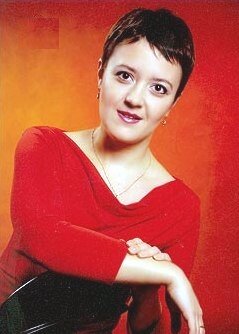
When Louis Dressner retired in 1993 and sold his company to Kevin McKenna, Denyse Louis and Joe Dressner, Shawn Mead had already worked there for several years. The new company saw Shawn's leadership potential and promoted her to National Sales Manager. Shawn Mead has stood side-by-side with Louis/Dressner through busy times and slow, through battles with distributors, through turbulence in the Northwest, a crashing dollar, global warming, and even through a completely unfounded lawsuit attempt by a former employee (It was thrown out before ever getting close to going to trial).
Those of you who know Shawn are familiar with how much she loves her job. When asked what she likes best about working for Louis/Dressner Selections, the answer doesn't take any time to think. "I love to spend time with my customers. I really enjoy it when we have time to just sit down and talk."
When you ask someone what they like the best about their job, the natural follow-up question is what they like the least. Shawn answered this way: "Any kind of unhappy customer upsets me. And the worst is those cases when they are unhappy because of something we did to upset them."
(Editor's Note: Fortunately, the large number of positive letters received over the years compared to the very small amount of complaints received tells us that there aren't many times when Shawn has to get upset.)
Shawn and John Mark's house is located on a six and one-half acre plot in Festus, Washington. The large lot gives them plenty of room to house their four kids and all their pets. They have two Quarter horses and four dogs: a Rottweiler, a German shepherd, a terrier and a Chihuahua-Dachshund mix.
That's not all! There's also Wiggles, a so-called "miniature" pig, who was supposed to weigh thirty pounds when grown. Wiggles now weighs 120 pounds. (He must be on the same diet as Joe Dressner!). Shawn's list of pets wouldn't be complete without mentioning Frisco, a Quaker parrot who talks. Frisco has picked up some of the following phrases from living in the Mead household: "I love you!" "Pretty bird!" "That's a Corked Bottle" "Oh, big boy!" "John, STOP that!"
Working about sixty hours a week, taking care of six acres and all those pets doesn't leave Shawn with a lot of free time. When she does have time, Shawn enjoys horseback riding and riding four-wheelers around her property or at St. Joe's State Park.
But her favorite activity of all, even more than her job, is babysitting Kiley, her new granddaughter. Shawn says, "Kiley is the biggest joy of my life right now."
Why not? I haven't been productive lately. I've been too busy looking for our lost 3,000 bottles of wine in Oregon. We got a tip that they were hiding in Eugene, but this turned out to be untrue.
Some guy named Doug Laber, who is the self-described President/Owner of a worthy organization called Reuse this Bag.com thought my readership would be fascinated by his adventures in the reusable bag racket.
Mr. Laber wrote me that lots of wineries are using wine bags as part the "whole eco-friendly responsibility deal." Mr. Laber is proudly cashing in on this "deal" and is selling over 30,000 wine bags a month and "wineries are loving our product."
He also has a side business in promoting reusable bags to raise money for churches. Perhaps, Mr. Laber is against using reusable bags to raise money for Mosques, Jewish synagogues and other UnAmerican places of worship. I'm not certain if Mosques and synagogues were intentionally omitted from his website or if the Muslim and Jewish reusable market has not yet been tapped to its potential by Mr. Laber. One of the advantages of using Mr. Laber's reusable bags at your church is "to market your church and help spread the word of God!"
You'll wants to see his website -- www.reusethisbag.com
Below, is the wonderful Blog Mr. Laberwrote for my readers:
"Red, white and green" has been the slogan for the eco-winery movement that has drawn a lot of media coverage over the past five years and some serious interest from major wine producers such as Robert Mondavi and Kendall Jackson in California. There is an eco-wine tour available in Oregon, which you might expect, and an organic wine shop in Manhattan, which some might find a surprise. Nevertheless the application of sustainable practices is well underway in the wine manufacturing industry, for economic as well as ecological reasons. Conserved water and energy lower production costs and reduction in pesticides coupled with careful tending produces a healthier vine.
The interest in sustainable practices has reached the retail level not only in the form of "green" wines that are the product of organically grown grapes and environmentally friendly production techniques, but also in the daily packaging that has become a highly visible focal point for food and beverage retailing in general. Non-woven Reusable wine bags are beginning to become the point-of-sale packaging of choice for wine shops and spirits purveyors who see the dual value of sustainable product carriers. As long as wine is packaged in glass bottles, wrapping it for the wine buyer will be an inexact process that may involve cardboard boxes, plastic bags or multiple uses of paper bags. There's no effective method of moving wine bottles out the shop door that doesn't involve a lot of recycling or landfill fodder.
That's why reusable wine totes are starting to appear in supermarkets along with the other reusable insulated bags and regular non-woven shopping bags that have become a solid alternative to paper and plastic. Now wine shops and liquor stores are picking up on the trend with reusable wine totes that are available made from a variety of materials and imprinted with a logo or slogan to identify the source of the bag – and hopefully drive repeat business. Reusable wine bags are an attractive alternative to plastic bags, paper sacks and boxes pulled out of the storage area. They are an excellent ancillary product for the sales counter and a lasting advertising placement for wine merchandisers in every marketing niche.
No one knows where they went!
Don't miss it!
It is going to be in the Lardon Truck which is going to be parked in front of Domaine LA, 6801 Melrose Avenue and Mansfield.
It will be from 4 pm to 7 pm and everyone is invited into the truck!
I will be making a rare appearance in Tribeca at the David Bowler Wine tasting.
We will be presenting 53 new wines.
Don't miss this exciting show!
My God....is 360 Van Brunt still closed?
Arnaud Erhart is celebrating a major birthday this weekend somewhere in the Loir-et-Cher. Lots of people in America talk about natural wine these days, people even write books, but it was Arnaud who really started the movement in America.
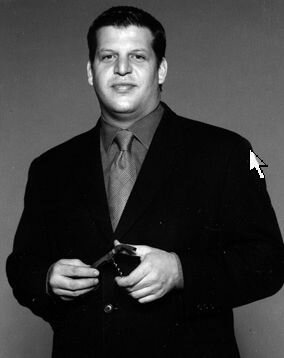
Arnaud is a native of Alsace, worked in various restaurants in France and New York and launched 360 in Red Hook some eight years ago. Its been closed now for three years and Arnaud has moved on to a new career in Oceanography based in Puerto Rico, partnering with Dr. Tania Puell (the niece of Dr. William Meyers of the Scripps Institute of Oceanography in San Diego).
But we all sorely miss Arnaud. It wasn't so long ago that the only place to get a natural wine in an American restaurant was in Red Hook or in Fort Greene at ICI. Arnaud was the innovator who introduced a whole range of vigernons to America. More than that, he is a great friend, perhaps even a great human being.
This weekend's celebration is going to be a serious evaluation of the man and his work.

Rumor has it that many movers and shakers in the wine business will be attending:
Participants from all over Burgundy are arriving in St-Gengoux to attend the 4th Annual Louis/Dressner Jeunes Vignerons Symposium.
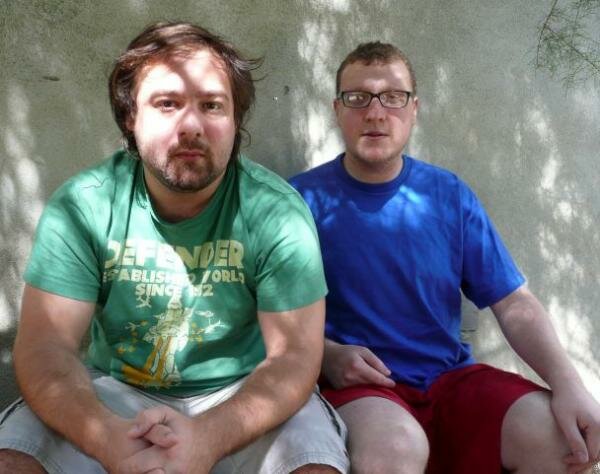
Stéphane Diderot and Gaston Laplace
Topics this year include:
This is going to be an amazing wine tour. I wish I could make it but I have to be in Poil Rouge. Farm Wine Imports has organized fabulous events that you won't want to miss.
Here's the schedule:
Sunday Aug 22nd
Tasting at Soif Wine Bar, Santa Cruz
105 Walnut Ave
3-5pm
$15/person, refundable with case purchase, reservations required. Light food will be served
Dinner La Posta, Santa Cruz
538 Seabright Avenue
Time TBA
Reservations are required and may be made by calling La Posta at:
Monday Aug 23rd
Tasting Enoteca La Storia, Los Gatos
416 North Santa Cruz Ave
6:30 - 8:30
$15 for the tasting, wine and olive oil
Tuesday Aug 24th
Dinner and Tasting 5-10pm
Farina Focaccia & Cucina Italiana
3560 18th St., San Francisco, CA 94110
T:
www.farina-foods.com
Reservations recommended
Wednesday Aug 25th
Tasting Biondivino
1415 Green Street, San Francisco, CA 94109
Call for details
Thursday Aug 26
Tasting Terroir Wine Merchants
1116 Folsom Street
6 to ????
I've decided to write the definitive manual to natural wine.
This is a confusing subject and a lot of readers, wine drinkers and assorted personalities have asked for guidance.
Please go to this link:
The Definitive Guide to The Natural Wine Movement.
This was originally posted on April 13, 2001. In those days, I didn't have cancer and we had a distributor in Maryland.
I'm writing this on the Metroliner returning from Baltimore to New York City. I have been in DC/Maryland/Virginia since Monday morning in an effort to promote Louis/Dressner Selections wines in this region. In the process, I have not only met a lot of Schnooks in the wine trade but have turned into a Schnook myself.
My Thursday's salesmanship highlight, was trying to convince two dead men who buy wine for an important retailer in Maryland to buy the Clos Roche Blanche Sauvignon Blanc. Despite the numerous amusing anecdotes I told the dead men about the vignerons, they rejected the wine on the grounds it was too acidic. But they greatly enjoyed the Corbieres Chateau la Baronne Rouge 1999 and immediately ordered a large quantity that will be case stacked at their important store. The dead is a market segment I want to learn more about in the future, as I see my firm has enormous growth possibilities with this important group. On the other hand, we are not doing well amongst the far more numerous Schnooks.
The two dead men did not qualify as being Schnooks as Schnooks are genuinely among the living. Addtionally, the two dead men tasted with glassware, whereas Schnooks always taste using plastic cups that they either have stolen from their Dentists or that they have bought in massive quantities from dental supply companies.
That's right. You, the average wine geek out there, are bombarded with endless literature about Riedel stemware and fret over which stemware is more appropriate for Burgundy and which stemware is more appropriate for your Flowers Chardonnay. Curiously, the DC/Maryland/Virginia market is flooded with Flowers Chardonnay, a winery that I always assumed is an internet invention. Kind of like Kay Bixler.
Anyhow, in reality the Schnooks who are deciding which wines you will be able to buy at your local retailer are making buying decisions by tasting wines in plastic cups. Here is how it works:
(1) The Schnook Salespeople from Schnook Distributors arrive at stores all across America with samples of wines from Schnook Importers (such as myself) or Schnook Domestic Wineries.
(2) The Schnook Retailer then humiliates the Schnook Distributor Salesperson over some late delivery or billing error for the first 15 minutes of the encounter. Since the Schnook Retailer is secure in the knowledge that the Schnook Distributor Salesperson needs his business (as the salespeople are working on commission) they take particular sadistic delight in making the salesperson feel sullied, stupid and humiliated. The veteran Schnook Distributor Salesperson learns to ignore this tirade and not take it personally. If the salesperson is a man and the retailer is a man, the skilled Schnook Salesperson allows the tirade to come to a halt and then tells a particularly salty dirty joke, usually involving oral sex, to make the Schnook Retailer laugh and feel a sense of camraderie with the Schnook Distributor Salesperson. They then proceed directly to important business deals.
(3) There are two variants to this stage. In the simpler variant the Schnook Retailer takes out his plastic cup and tastes all the wine samples the Schnook Salesperson has brought with him. The Schnook Salesperson tries desperately to bombard the Schnook Retailer with all the scores the wine in the plastic cup has received in The Wine Advocate, The Wine Spectator, The Wine Enthusiast, The Paul Roberts Wine Monthly, or any other periodical that has mentioned the wine and that can be turned into a shop talker. This is a very important point: the wine needs a good score somewhere, anywhere, because the Schnool Retailer does not have the time to do "hand-sells." The Schnook Retailer has a difficult job during this phase of the ritual, having to smell, taste and spit (already made more difficult by the wine being in a Dentist's plastic cup) while listening to the Schnook Salesperson's passioned narrative of 89 points, 90 points and 87 points for each wine.
A subvariant of this process in the Schnook Retailer having a Designated Taster, a kind of sub-Schnook, who tastes all the wines in a designated plastic cup and decides which wines merit being tasted by The Main Schnook. This is something I have never seen outside of the Washington, DC area.
Regardless of whether it is the Designated Schnook or the Main Schnook there are now two fascinating rituals to observe. Some Retailers use one plastic cup for whites and another plastic cup for reds. Some use different plastic cups for each wine. I suppose this is often a function of the tasting budget alloted by each store. Because often the Retail Schnook Buyer is but an employee working within the budgetary limitations of a Boss who doesn't even bother coming into the store. I did observe during this trip that our wines were much better received by the Schnooks who change cups with each wine. They tend to be much serious wine tasters.
After evaluating the wines through any of the above methods, the Retail Schnook then tells you which wines they will order. This is prefaced by an interrogation where the Retail Schnook demands to know the name of every retail store in the immediate area who carries the wine and what they are charging per bottle. The Retail Schnooks especially like wines that are not carried by their competitors: normally they mark-up the wine 50%, but if no competing Schnooks carry the wine they can add another $1.00 to the bottle price. In general, the Distributor Salesperson Schnook blatantly lies at this point and assures the retailer that non one else in the continental United States will carry the wine if they take 5 cases and make a floor stacking.
I am always shocked by the sheer squeals of delight by Retail Schnooks when they find out their 5 case purchase will be an American exclusivity. Since I work for a fringe company, the Retail Schnooks assume that no one carries my wine anyhow and sometimes mark it up $2.00 for a an additional $120.00 profit on their 5 case purchase! If I am present, working with the Schnook Salesperson, the Schnook Retailer then tells me how he loves working with insignificant companies like Louis/Dressner Selections because our wines are so badly distributed and obscure that he can make enormous and objectionable profits from carrying our "product."
What do we call this system? We in the wine and liquor trade call it "The Three-Tier System."
Of course, the entire market is not like this. There are fabulous retailers out there and great distributors with great salespeople. They truly do exist and eventually wine geeks figure out who they are and patronize them.
Despite being a schnook myself I have met many of these people. But even these people are obligated to carry Schnook wines along with the often excellent selections they sell. It's a schnook world out there and everyone needs a schnook cash flow to stay in business.
And don't forget that without the Three-Tier Schnook System there would be nobody to warehouse, truck and get out wine to retailers and restaurants outside of a handful of major wine markets.
Yes, the Schnooks perform many useful functions.
Had a wonderful meal last night at Liverpool House in St-Hénri. I've already been at Joe Beef two times and thought it would be interesting to try their other restaurant. We're staying in St-Henri, a neighborhood I love, and these two restaurants are strangely convenient.
David McMillan was an incredibly gracious host and the meal was delicious. I haven't had succulent steamers (from Prince Edward Island) in so many years and drinking a Gras Mouton 2008 from Marc Ollivier with the steamers was a great treat.
This was a sentimental match for me. I have been friends with Marc Ollivier for twenty years and seeing his wines in Montréal is very gratifying. My father Sam, who died 3 1/2 years ago, used to love eating Steamers and we would often go to Paddy's Clam House on 34th Street in the Garment Center to eat. Another lost New York institution.
I haven't thought about eating steamers at Paddys with my father in over 20 years. But isn't that what great food and wine is all about? Being transported elsewhere, bringing back memories and feeling blessed and spoiled. That's when I know food and wine are working, when they make me dream, hope and feel lost in time.
I'm trying to be reasonable so I had John Doré as my main course in a beurre blanc, with the asparagus (in high season) and with delicious morrels swimming in the sauce.
Liverpool House, along with Joe Beef next door, have great wine lists and I thought I should ignore all the French wines I love and drink Canada. We drank a Norman Hardie County Pinot Noir 2008 from Prince Edward County (home of my good friend Jeff Connell). The wine was very pretty to my taste, at 11.5% Alcohol (!!!) and went great with the John Dory.
I had some smoked cheddar at the end of the meal. Joe Beef and Liverpool House have their own smoker and smoke their meats and other dishes. Lovely cheese.
David gave us a tour of the herb and vegetable gardens he has around Joe Beef and the Liverpool House. This is really taking local farming to the next extreme -- growing your own in an urban setting and serving from your own garden.
I only wish there were more places like this in New York! It is just so expensive to run a restaurant in that town and difficult to do everything with a chef's vision. Too often you need a PR Firm's vision to make it work and pay the bills. Things are changing in Brooklyn and slowly in Manhattan -- it doesn't take much -- great fish, meat, vegetables and natural wines!
Thanks again to David for a great evening.
David grew up in St-Henri and talked to us about how it was astonishing for him to return to where he was a kid and open three restaurants along with his partner Frédéric Morin. He remembers running around the alleys behind the restaurants as a 7-year-old making trouble for all his neighbors. St-Henri was always a tough neighborhood and still keeps some of its edge. Everyone always talks about gentrification here, but it is going very, very slowly. The neighborhood keeps its character.
Tonight, we're off to Les Trois Petits Bouchons with Québecs great wine importer Jean-Phillippe Lefebvre and the mysterious Genevieve Boucher.
I'm supposed to do a wine tasting in 40 minutes at the Georges Vanier Metro stop but may cancel it until tomorrow. I'm still not dressed.